Planet Coaster 2 Suspended Coaster: Models & Build Tips
Find your Planet Coaster 2 suspended coaster, compare Vector models and Toybox Pack content, and plan smoother inversions, scenic layouts, and supports.
Jump to
Which Suspended Coasters Can You Build?
Your Planet Coaster 2 suspended coaster options include Vector’s Inverting Suspended coaster and the Toybox Pack’s New-Gen Inverting Suspended Coaster. The New-Gen model supports modern Vekoma-style thrill and family layouts, giving you room to build beyond an inversion-heavy attraction. Choose your model before shaping the track so the train, lift, and layout match the ride you have in mind.
Several other coasters also carry riders beneath the track. These are distinct ride types, so pay attention to the full name rather than looking only for “suspended.”
| Coaster | Manufacturer | Content |
|---|---|---|
| Inverting Suspended coaster | Vector | Base game |
| New-Gen Inverting Suspended Coaster | Vector | Toybox Pack |
| Inverted - 2 Seater | Giovanni | Base game |
| Inverted - 4 Seater | Valais & Nidwalden | Base game |
Vector’s Giant Inverted Return and Outamax’s Momentum offer additional overhead-track options. Their real-world inspirations are the Vekoma Giant Inverted Boomerang and Intamin Impulse Coaster, respectively—different starting points from the New-Gen model’s suspended thrill coaster design.
Official page: Planet Coaster 2 (planetcoaster.com)
Suspended, Inverted, and Swinging Coasters
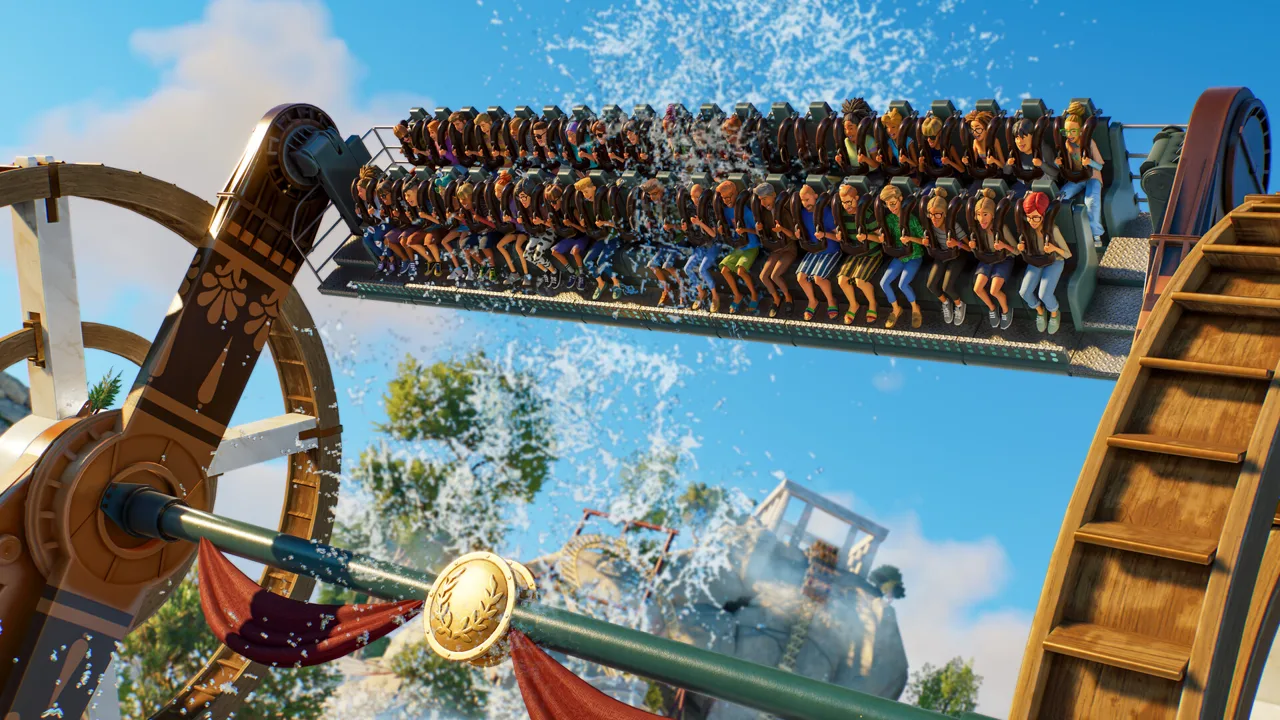
If you picture Iron Dragon at Cedar Point or Ninja at Six Flags Magic Mountain, you’re thinking of an Arrow-style suspended coaster with swinging cars. That movement is a defining part of the experience, beyond simply having track above the passengers.
 Image: Steam / Frontier Developments
The New-Gen Vector model represents a modern Vekoma suspended design. Its trains have less swinging movement than an Arrow-style train, and its ability to handle inversions makes it a different building proposition.
Keep that distinction in mind when planning a recreation. An overhead track alone won’t reproduce the movement of a classic swinging coaster. Likewise, a suspended dark ride serves a different purpose from a thrill coaster, even though both place the vehicle beneath its track.
Building With the New-Gen Vector Model
The Toybox Pack’s New-Gen Inverting Suspended Coaster includes a chain lift, a friction-wheel lift, and standard and thinner alternate track styles. Its two-across seating gives the train a noticeably different profile from a four-across inverted coaster.
 Image: Steam / Frontier Developments
Decide whether you want a suspended family layout or a thrill layout before building the main elements:
- For a family-style build, emphasize sweeping turns and a winding route through scenery.
- For a thrill-style build, explore overbanked turns, zero-G rolls, corkscrews, and helices.
- For either direction, leave space to refine transitions before committing to detailed scenery.
Use the lift as part of the composition. A large turn alongside it can bring the moving train back into view, while a drop over water can make the opening section visible from several parts of the park.
Shaping Inversions Around the Hanging Seats
The New-Gen train’s seats sit well below the track, making inversion profiling especially important. A track shape that looks convincing from above can produce an awkward-looking rider path underneath.
 Image: Steam / Frontier Developments
Refine rolls with the seats in mind. Watch the ride from the onboard view, then inspect the same element from outside to see how the train moves through the entry, rotation, and exit. Adjust the surrounding curves as well as the inversion itself.
For a layout example, combine a sweeping first drop with an elevated overbank, then carry the turn into a zero-G roll. Elsewhere, a corkscrew followed by a helix and another zero-G roll creates a compact sequence of changing directions. Adapt those combinations to your terrain instead of forcing every element into the same small footprint.
Supports, Water, and Trackside Scenery
Automatic supports on the New-Gen model can extend noticeably far from the track. Inspect those arms closely around exposed turns and water crossings, where their proportions are easy to see.
Use custom scenery supports where you want more control over the appearance. Start with the most visible sections, such as the first drop or a turn beside a guest path, before detailing less prominent stretches.
Build the setting around the train’s path beneath the rail. Leave visual breathing room around hanging seats when placing trees, trench walls, or structures. For a lakeside attraction, position bridges and approaching paths to frame the drop or an overbanked turn. Those views let the coaster contribute movement to the surrounding area while guests approach the station.
Continue with
 Planet Coaster 2 Water Slides: Build and Flume GuideBuild Planet Coaster 2 water slides with tips for all seven slide types, custom flumes, pool endings, testing, and the facilities your water park needs.
Continue exploring
Planet Coaster 2 Building Guide: Better Custom Parks
Use this Planet Coaster 2 building guide to create custom shops, master grids, improve roofs and lighting, and build parks with more detail and less fuss.
Planet Coaster 2 Paths: Build Plazas, Ramps, and More
Master Planet Coaster 2 paths with tips for plazas, queues, stairs, ramps, railings, and precise edits. Learn the tools and build connected park walkways.
Join the community
Official channels for news, updates and player help: